
Further reading for this work
Compare the relevant considerations before arranging your quote.
Types of slate roof
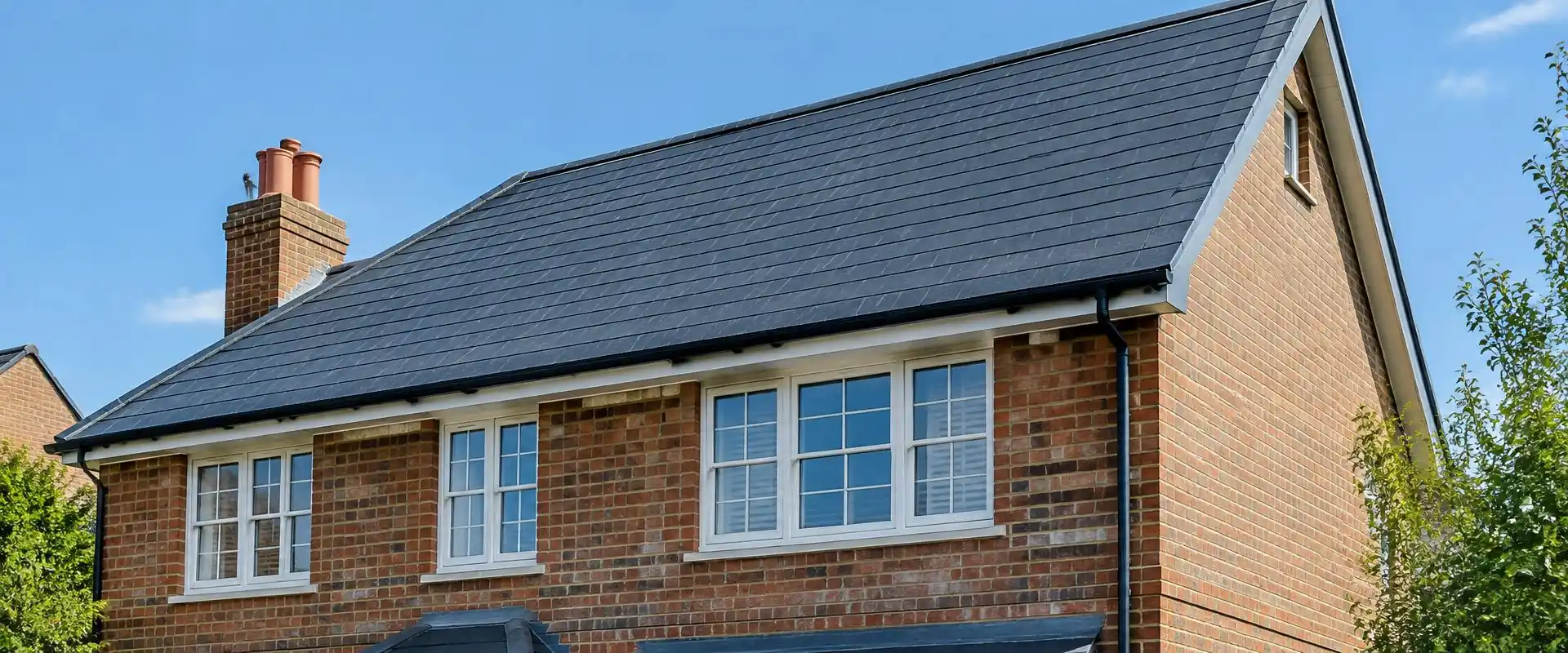
Most slate roofs in Essex fall into two groups. Natural slate, typically Welsh or Spanish, is split from stone and has an irregular texture and a slight variation in colour and thickness that gives it its traditional character. Fibre cement slate is a manufactured alternative, more uniform in size and finish, and generally lighter and less expensive than natural slate while giving a similar appearance from the ground.
Each is fixed in a similar way, nailed or hooked to battens in overlapping rows, but they behave differently with age and need slightly different handling when repairs are carried out.
Common slate roof problems
Slate roofs develop their own particular faults over time:
- Slipped or missing slates, usually where the fixing nail has corroded and let go, known as nail sickness
- Cracked or delaminating slates, where the stone has split along its natural layers after years of weathering
- Fibre cement slates that have become brittle and crack underfoot or in high wind
- Lifted or disturbed slates around valleys, hips and ridges
- Torn or perished underlay beneath the slates, which only becomes visible once slates are lifted
Repairing a slate roof
Individual damaged slates may be replaceable without stripping the whole slope. A suitable repair fixing must retain the slate without compromising the overlap or neighbouring pieces; the correct method depends on the covering and support. Where nail sickness is widespread, meaning several slates across a slope are loose or have slipped for the same reason, a localised patch may only buy a little time before more slates fail nearby, and a wider assessment of that slope is worthwhile. Our roof repairs page covers the other common roofing faults we deal with alongside slate work.
Matching slate on a repair
Because natural slate varies in size, thickness and colour between quarries and even between batches, matching new slate to an existing roof is not always straightforward. Reclaimed slate is sometimes the best way to match an older roof convincingly. Where an exact match is not possible or not essential, a close match can usually be found that blends in reasonably well, particularly on less visible slopes.
Slate on listed and period buildings
Slate is common on Victorian and Edwardian properties, including many listed buildings and homes in conservation areas, where the size, colour and laying pattern of the slate may be specified or protected. If your property is listed, check what is required before replacing slate, and see our listed building and heritage roofing page for more on consent and matching materials.
Considering a new slate roof
Where a slate roof is beyond economical repair, re-covering in slate is one option worth discussing, alongside concrete or clay tile alternatives. The choice between natural slate, fibre cement slate and tile comes down to appearance, weight, and budget, and each has its place depending on the property and what suits it. Our new roofs page sets out how a full re-roof is carried out, from scaffold through to the finished ridge, whichever covering is chosen.
What affects the cost of slate roof work
Slate work costs vary with the type of slate, how many slates need replacing, roof pitch and access, and how difficult matching the existing material proves to be. Material availability and handling requirements affect the quotation, and steep or complex roofs with multiple valleys and hips take longer than a simple pitch. An inspection helps establish whether the work is isolated or part of a wider fixing or underlay problem. For a broader roofing overview, visit our main roofing page, or request a quote.