
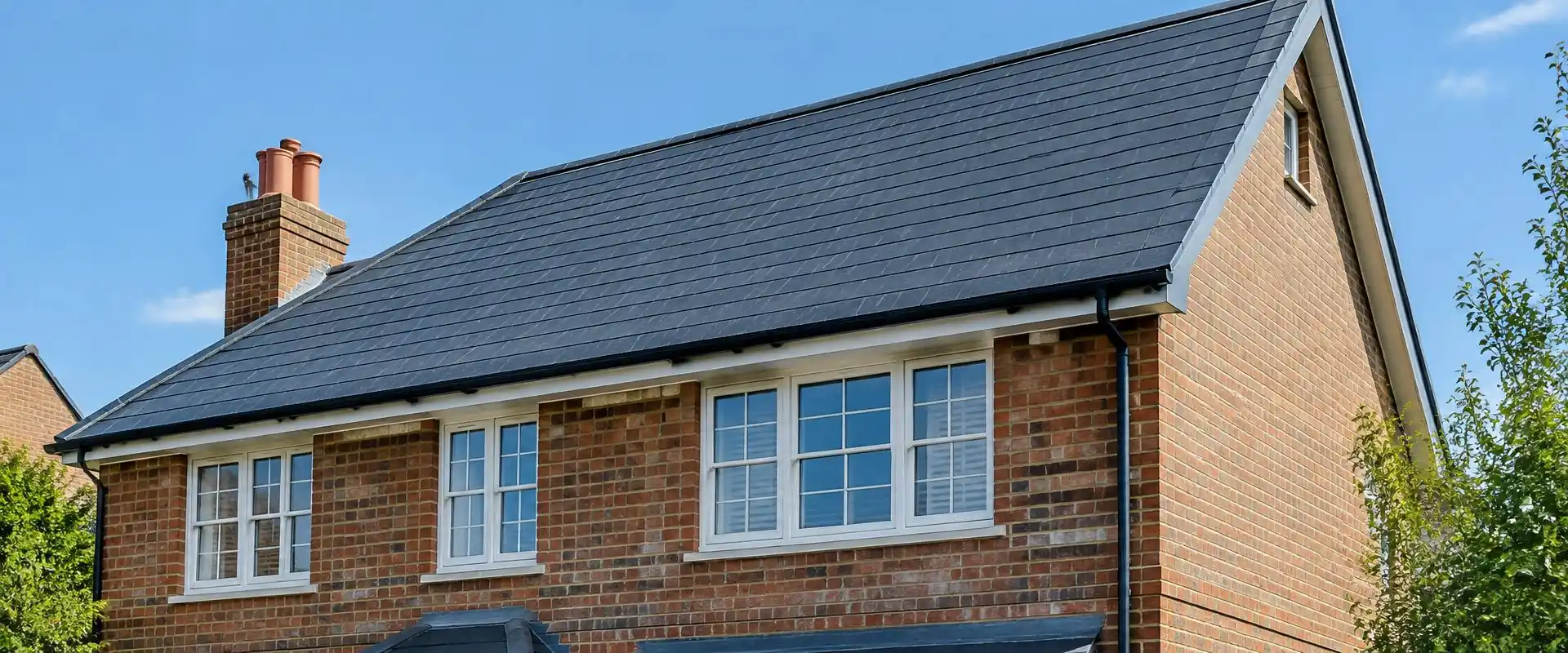
Start by identifying the materials
Natural slate is stone split into roofing pieces, with variation in texture and colour. Fibre cement slate is a manufactured product with a more uniform appearance; it should not be treated as identical to natural slate. Roof tiles may be made from concrete or clay and come in different formats, including plain and interlocking designs.
In a slate vs tile roof comparison, the laying pattern matters as much as the material name. Plain tiles and many slates use overlapping courses, while interlocking tiles have shaped connections between neighbouring pieces. That affects the detail of the roof and the work involved. Our slate roofing page explains slate-specific repair and material considerations.
Appearance depends on the whole roof
Natural slate often creates a flatter, more finely textured surface, but the size, colour and laying pattern change its character. Tiles can provide a strong profile or a flatter traditional pattern. A sample held in your hand may look different across a complete roof, especially beside existing brickwork or neighbouring properties.
Look at an appropriate range of samples and identify the exact product rather than choosing only “grey slate” or “red tile”. If the building is listed or within an area with planning restrictions, check whether a material change needs consent. A neighbouring roof is useful visual context but does not determine what is permitted on your own building.
Concrete tiles vs clay tiles
Concrete and clay tiles are both available in varied shapes and finishes, so broad statements that one is always better are unhelpful. The chosen product’s format, fixing requirements, recommended pitch and appearance matter. Interlocking concrete tiles and small clay plain tiles, for example, involve different numbers of pieces and laying arrangements.
Clay can offer the colour and texture associated with traditional roofs, while concrete products provide a range of practical profiles. Compare product specifications and suitable examples, not a blanket lifespan claim. Material price alone also misses ridge, hip, verge and ventilation components, which need to match the proposed roof system.
Pitch, exposure and fixing requirements
Every covering needs to be suitable for the roof pitch and exposure. Required overlaps, batten spacing and fixings depend on the particular product and design. A slate or tile that looks right may not be suitable for a shallow slope. Wind exposure and roof shape also influence how the covering is secured.
Ask which installation specification is being proposed and how valleys, roof windows and wall junctions will be detailed. Those junctions can be especially important on a complex roof. Switching materials without revisiting the arrangement beneath them risks treating the new covering as a cosmetic change when it is part of a complete weatherproof system.
Weight and the existing structure
Do not assume all slate is lighter than all tile, or that two products have similar installed weights because individual pieces feel alike. The total roof load depends on the material, thickness, format and number of overlapping pieces. A change of covering needs a structural assessment where appropriate, particularly if the existing timber condition is uncertain.
The quote should explain any required strengthening and the assumptions used. Roofing underlay, battens and ventilation also need consideration, not simply the surface material. Our new roofs page sets out the wider replacement sequence so you can judge the whole proposal rather than compare bundles of slate with pallets of tile.
Repairs and future matching
An isolated damaged slate or tile may be replaceable when the surrounding roof remains sound. Matching size, shape and fixing arrangement is important, not only colour. Natural slate varies between sources, and old tile profiles may be discontinued. Ask about availability before assuming a future repair will be visually exact.
Faults also differ. Slate can slip when fixings deteriorate; tiles can crack or move, and either roof can develop problems in underlay or flashing. Maintenance involves the complete roof, including gutters and junctions. A surface material comparison cannot guarantee freedom from leaks or establish when a particular roof will require replacement.
Compare complete specifications, not headline prices
Costs vary with product choice, roof geometry, access and the condition revealed during stripping. Smaller units or complex detailing may involve more laying work, but the actual quotation must follow the chosen specification. Our new roof cost guide explains the broader pricing factors without inventing an average figure.
Ask for the covering, underlay, battens, fixing system and ridge details in writing. Compare removal and disposal, scaffold and any timber repairs on the same basis. If the existing roof only needs a local repair, do not assume that selecting a different covering is the necessary next step. Establish the condition before deciding on a full re-roof.
Need it sorted? Book a new roof assessment
Book a new roof assessment and request a quote, telling Lee which materials you are considering. A free site visit and written proposal help relate the choice to your roof’s shape, structure and existing appearance.