
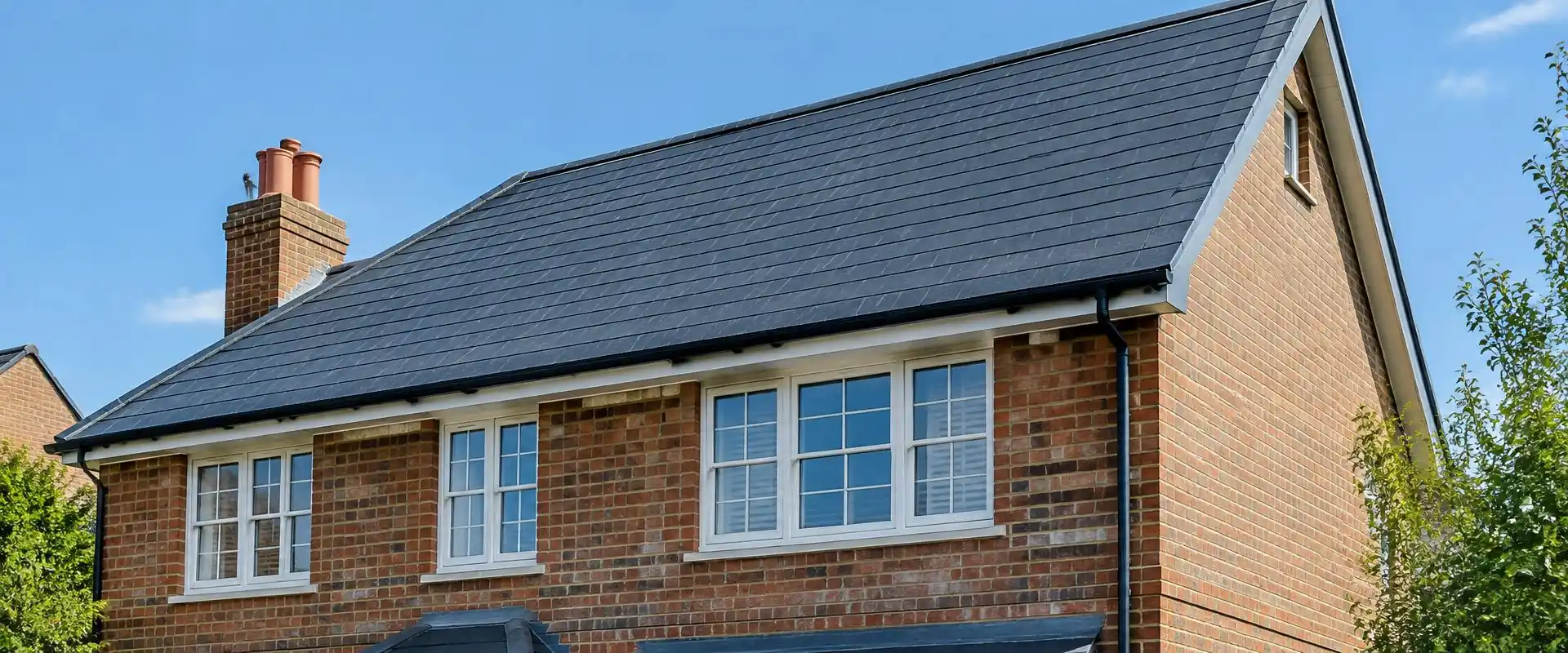
What lead flashing does
A tiled or slated roof is designed to shed water down its slopes, but the moment it meets something vertical, such as a chimney breast, a party wall or a dormer cheek, there is a junction that tiles alone cannot seal. Lead flashing bridges that gap. It is dressed into the brickwork joints on one side and laid over the roof covering on the other, so water running down the wall or the stack is carried onto the tiles instead of behind them.
The same principle applies around roof windows, at valleys where two roof slopes meet, and along abutments where a roof butts against a taller wall.
Where lead flashing is used
Lead flashing and leadwork appear in several forms, depending on the junction being weatherproofed:
- Chimney flashing, including the front apron, back gutter and stepped flashing along the sides of the stack
- Valley linings, where two roof slopes meet and a large volume of water has to be carried away
- Abutment flashing, where a roof meets a higher wall or an adjoining building
- Soakers and step flashing, small individual pieces woven between tiles or slates against a wall
- Dormer window flashing, around the cheeks and head of a dormer
- Flashing around roof windows and other roof penetrations
Why lead flashing fails
Lead is a soft, durable metal, but it moves with temperature changes and can crack, split or work loose over many years, particularly where it was dressed too thin or fixed poorly in the first place. Mortar pointing that holds the top edge into the brickwork can also fall out, letting the lead lift away from the wall. Once either happens, water tracks behind the flashing rather than over it, often showing up as a damp patch well away from the actual leak.
Repair or renewal
Not every flashing fault needs the lead replaced outright. Loose edges can sometimes be re-dressed and re-pointed into the brickwork, and a small split can occasionally be repaired. Where the lead is extensively cracked, been patched with sealant in the past, or is simply too thin for the job, renewal with a new piece is the more reliable option. The condition and design of the junction should determine the repair, not the visible stain alone.
Lead and chimney work together
Chimney flashing is one of the most common sources of a leak that appears to come from the brickwork but is actually a flashing fault. Our chimney repairs page covers the other faults that affect chimney stacks, including repointing and flaunching, and is worth reading alongside this page if the leak is around a chimney.
Older properties and heritage considerations
Lead flashing on listed buildings or in conservation areas often needs to match the existing detailing, and alterations to visible leadwork may need consent from the local authority. Our listed building and heritage roofing page sets out what that generally involves before any work is agreed.
What affects the cost of lead flashing work
The cost of a flashing repair or renewal depends on the length and location of the run, how it is accessed, and the thickness or code of lead required for the span. A short section of soaker flashing is a different job to a full valley lining or stepped flashing along a long party wall. A quotation should set out the extent of the leadwork and any adjoining repairs separately. For the roof generally, see our roof repairs and roofing pages, or request a quote for the flashing itself.
Details worth specifying in a quotation
A quote should identify whether it includes the underlying soakers, the cover flashing and the joints securing the upper edge, not just a visible strip of metal. Longer sections need detailing that accommodates movement. Ask how adjoining tiles and masonry will be left after the work, particularly where old sealant has hidden several separate defects.