
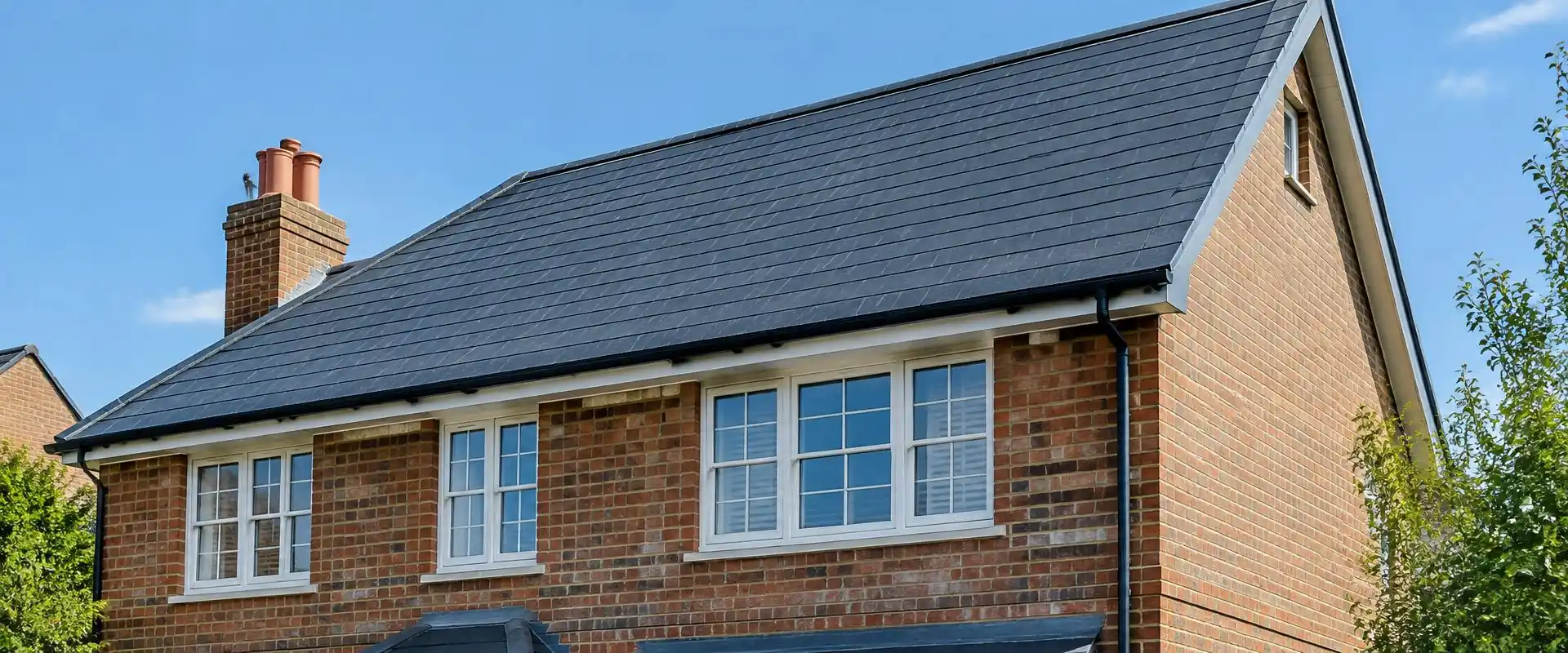
Why chimneys need more attention than the rest of the roof
A chimney stack stands proud of the roofline, so it is hit side-on by wind-driven rain and takes more frost and thermal movement than the surrounding tiles. The brickwork, the mortar joints, the capping on top and the flashing where it meets the roof are all doing separate jobs, and any one of them can fail without the others showing a problem straight away.
Water marks around a chimney breast need investigation rather than an assumption about their source.
Common chimney faults
A chimney assessment needs to distinguish several kinds of fault:
- Repointing, where the mortar between the bricks has eroded, crumbled or fallen out, letting water soak into the stack
- Cracked or spalling brickwork, often from years of frost getting into damp bricks
- A leaning or unstable stack, which needs careful assessment before any work is carried out
- Damaged flaunching, the mortar fillet around the chimney pots that sheds water off the top of the stack
- Cracked or missing chimney pots, and pots that have slipped out of true
- Failed flashing where the stack meets the roof, discussed in more detail below
Flashing around the chimney
A chimney leak can originate in the flashing at the base of the stack where it joins the roof slope. If the flashing has lifted, cracked or been poorly repaired in the past, water tracks down inside the chimney breast long before any damp shows on the brickwork outside.
We cover lead flashing in more detail, including how it is fitted and how junction details influence performance, on our dedicated lead flashing page.
Disused and redundant chimneys
Not every chimney is still in use, but an unused stack still needs to be weathertight. A capped or redundant chimney can be fitted with a vented cap or a cowl to keep rain out while allowing the flue to breathe, which helps prevent trapped damp inside the stack and the chimney breast below.
What affects the cost of a chimney repair
Chimney repair costs vary with the height and condition of the stack, the type of access needed, and how much of the brickwork, flaunching or flashing has to be renewed. A straightforward repoint on a single-storey bungalow is a different job to scaffold access on a three-storey terrace with a leaning stack. A meaningful quotation needs to identify those requirements rather than assume that every stack needs the same work.
Older and more unusual chimneys
Chimneys on period or listed properties often use lime mortar rather than modern cement, and repointing with the wrong mix can trap moisture in the brickwork and make matters worse. If your home is listed or sits in a conservation area, works to the chimney may need consent from the local authority, and matching the existing brick and mortar is usually expected. Our listed building and heritage roofing page covers this in more depth.
Getting a chimney looked at
If you can see cracked brickwork, crumbling mortar, staining on the chimney breast inside the house, or daylight around the flashing from the loft, it is worth having the stack checked before the next spell of bad weather. For the roof as a whole, our roof repairs page explains the other faults we deal with, and our main roofing page connects the wider roof services. You can request a quote or call to arrange a look at the chimney.
Choosing a local chimney repair contractor
For chimney repairs in Chelmsford or elsewhere in Essex, ask prospective chimney repair companies to explain which defect they have identified and how it will be reached safely. A chimney repair service should distinguish masonry work from flashing renewal, and specify whether further structural or flue advice is needed. Authentic Building & Roofing Ltd is based in Witham; send an enquiry to discuss the proposed work.