
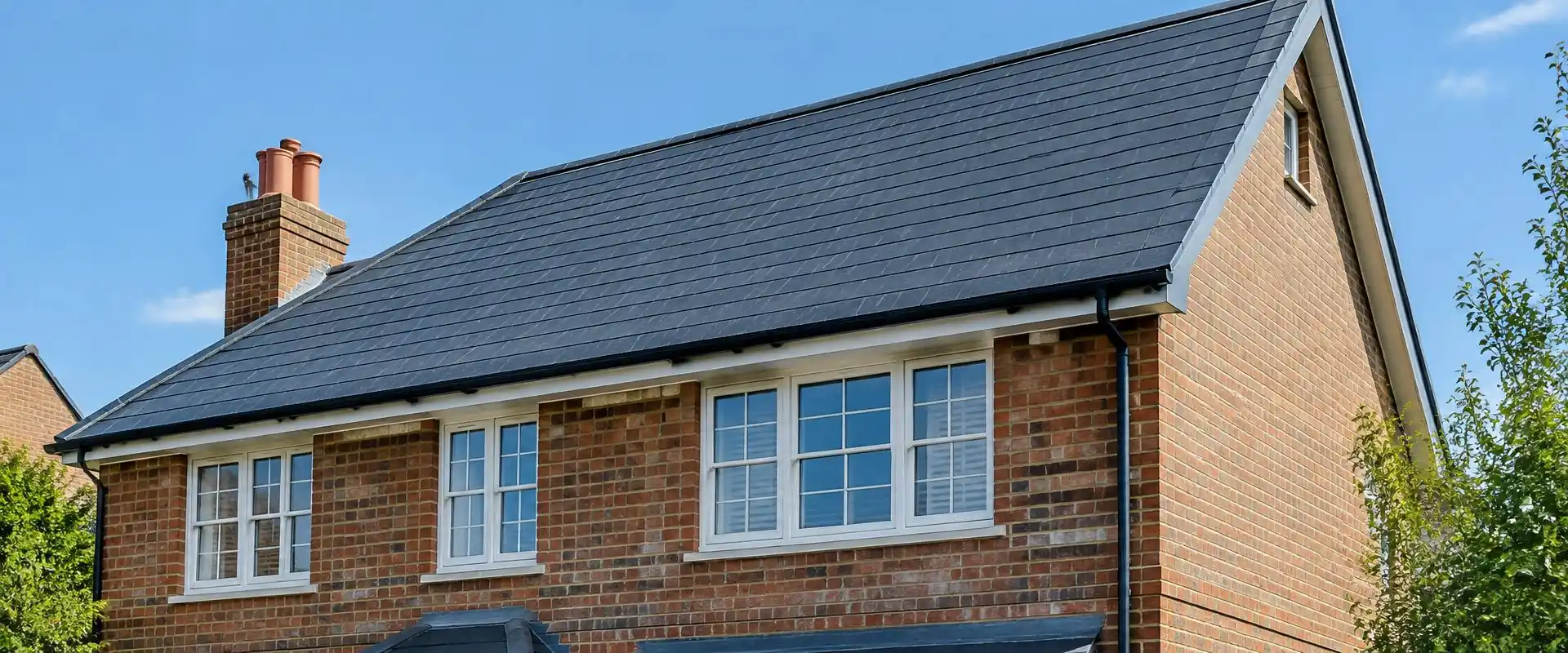
What a slipped or missing tile actually means
Tiles slide out of position or disappear completely for a few common reasons: the nib that hooks over the batten has worn or chipped, the nail or clip holding it has rusted or come loose, or a gust of wind has got underneath and lifted it clear. Once one tile moves, the gap it leaves can let rain reach the felt or lining underneath, and nearby tiles can be more exposed too.
Seeing it from the ground is usually the first sign. Stay off the roof and off a ladder to look closer; a photo taken safely from a window or the garden is far more useful than trying to inspect it yourself.
Matching the tile profile
Roof tiles come in different profiles, plain tiles, interlocking tiles, pantiles and various proprietary shapes, and each manufacturer's range has its own dimensions and overlap. Fitting the wrong profile next to existing tiles can leave gaps or an uneven surface, so the first step is identifying what is already on the roof. Where an exact match is not available, because a range has been discontinued or a roof is older, a close match is sourced and positioned where it will be least noticeable, or reclaimed tiles are used to keep the whole roof consistent.
Checking what the tile sits on
A new tile is only as good as what holds it in place. Battens that have rotted, split or come loose need replacing or refitting before a tile is put back, otherwise the repair will not last. Fixings matter too: clay and concrete tiles are usually held by nibs plus a nail or clip at exposed positions such as verges, ridges and hips, and these fixings are checked on surrounding tiles as well, since if one has failed from age or corrosion, others nearby are often close behind.
Cut tiles and valleys
Tiles cut to fit around a valley, chimney or roof window are more exposed than a full tile, because the cut edge and the join with the valley lining are both potential weak points. Where tiles have slipped or cracked near a valley, the lining underneath is checked for splits or corrosion as well as the tiles themselves, since a damaged valley can be the real reason a tile has moved in the first place rather than a simple fixing fault.
When it is more than a tile or two
If several tiles have slipped, if the battens underneath are failing in more than one place, or if the tiles themselves are brittle and crumbling with age, patching one area at a time stops being good value. Lee will say so plainly rather than keep repairing the same roof piecemeal, and set out the option of a more thorough re-lining or a full re-roof alongside the cost of continuing with individual tile repairs, so you can weigh up both.
What affects roof tile replacement cost
There is no fixed price for tile replacement, because the work varies from job to job. The number of tiles involved, how high and steep the roof is, whether scaffolding or a tower is needed to reach safely, how easy it is to source a matching tile, and the condition of the battens and lining underneath all make a difference. A single accessible tile is a very different job from several tiles around a valley on a steep, high roof, and the written quote reflects what is actually found once the roof has been looked at properly.
Need it sorted? Book a roof repair
If you can see a gap, a cracked tile or one lying in the garden, book a roof repair or use our quote form and let Lee know where it is. The assessment should identify the tile and any underlying damage before the repair is priced.
If water has already started coming through as a result, our roof leaking page covers what to do about an active drip, and emergency roof repairs explains requesting help for more serious, sudden damage.