
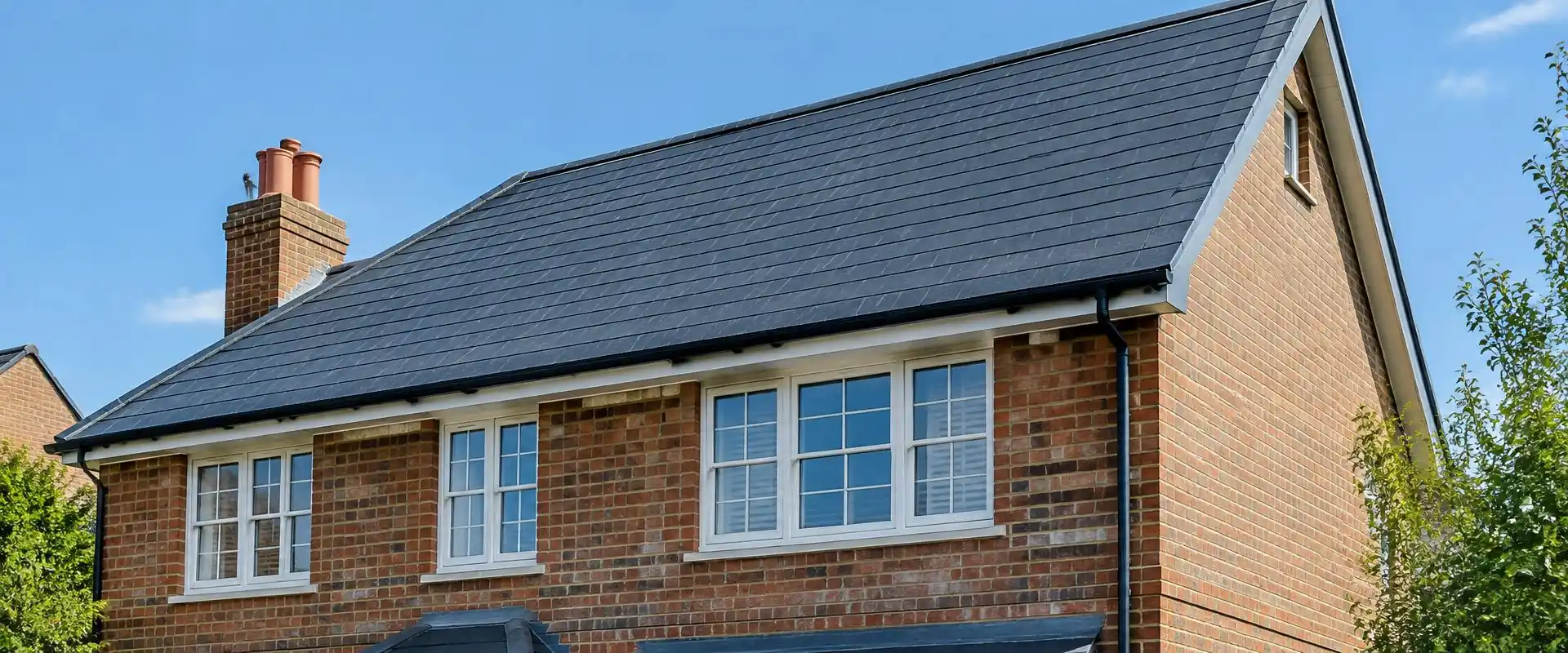
Recognise the change without climbing up
Look from a safe location at the overall ridge and roof plane. A local depression between supports is different from a broadly bowed slope, and an uneven covering can sometimes exaggerate the appearance of movement. Photographs taken from the same position can help record a change over time.
Do not walk on a roof to test how firm it feels or enter beneath visibly failing construction. If movement is sudden, masonry is falling or there is an immediate danger to people, keep clear and seek urgent professional help; call emergency services where there is immediate risk to life.
The covering and structure are different layers
Tiles or slates transfer loads to battens and the supporting roof construction. A sag can involve rafters, purlins, connections or supports rather than the visible covering alone. Renewing tiles over an unresolved structural problem does not establish that the roof is safe or restore the missing support.
An assessment needs to describe where movement appears and which parts can be inspected. Older roofs can have irregularities that require context, but age does not make new deformation harmless. The inspection should distinguish long-standing shape from signs of active movement rather than relying on an external photograph alone.
Possible causes need evidence
Damp-related timber deterioration, altered supports, excessive loading or failed connections can contribute to movement. Earlier building alterations may also be relevant if walls or roof members were changed. These are possible explanations, not diagnoses that can be made just because a ridge looks low.
Tell the assessor about past roof changes, room alterations and any known leaks. A heavier replacement covering may be relevant to the history, but its presence does not prove it caused the sag. Loads and support need assessment for the actual structure, with specialist input where required.
What can be checked safely indoors
Changes in ceiling lines, sticking openings or cracks may provide useful context, though each can have other causes. Record when you first noticed them and whether they are progressing. Do not remove finishes, props or structural members to reveal the roof yourself.
Loft access should only be used where it is safe and supported. Avoid disturbing stored loads or damaged timber without advice. An assessor may need a controlled inspection of the roof space, and the limitations of any initial visit should be recorded rather than replaced by a confident guess.
Inspection and structural advice
Our roof inspections page describes checking accessible construction and roof defects. A structural engineer may be needed to determine the cause of movement and design any support or repair. A roofer's covering assessment is not a substitute for calculations where the structural question requires them.
Ask which professional is responsible for each conclusion and what further investigation is recommended. The outcome may involve targeted structural repair, work to the covering or more extensive renewal. No single repair method should be prescribed before the construction, condition and loads are understood.
Why replacement is not the first assumption
A sagging roof is not automatically solved by a complete re-cover, and it does not automatically mean the whole roof must be demolished. The extent of deterioration and the ability to repair the supporting structure determine the sensible scope. Temporary measures must also be professionally assessed, not improvised beneath the roof.
If renewal is recommended, the new roofs page explains the covering work. The repair or replace guide considers broader condition-based decisions. Here, the priority is the changed shape and structural question, which must be resolved before comparing cosmetic or waterproofing options.
Set out responsibilities before agreeing work
A written proposal should identify the diagnosis, any structural design, required approvals and the work to make the roof complete. Access, stripping, temporary protection and disposal also influence scope. If the initial assessment cannot establish the cause, that uncertainty should remain explicit.
General building regulation guidance cannot confirm compliance for a particular support arrangement. Check requirements with building control and obtain appropriate professional advice. Request an inspection using safe photographs and a record of changes, but do not delay seeking urgent help if the condition suggests immediate danger.
Need it sorted? Book roof inspection
Book roof inspection or request a quote. Explain what you have noticed and what you want to change. Authentic Building & Roofing Ltd is based in Witham, serving Essex and the Essex-side outskirts of London. Contact Lee Draper to discuss a free site visit and written quote; the proposed scope needs checking against your property.