
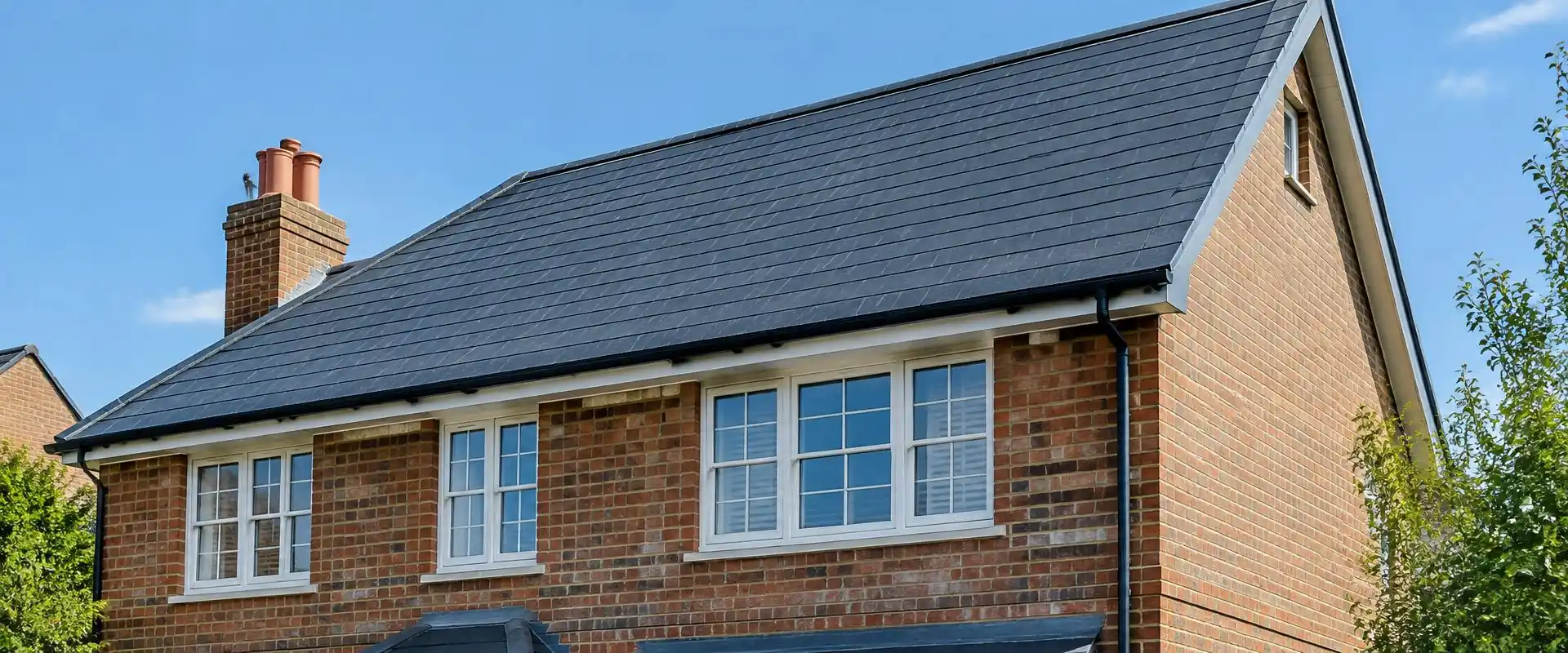
Small fixes and bigger jobs
A few slipped tiles near the gutter on a bungalow are a very different proposition from cracked ridge mortar along the top of a three-storey townhouse. Both are repairs, but one may be done from a ladder in a morning and the other may need scaffold before anyone can touch it. That gap explains most of the variation people see when they ask around.
Typical smaller jobs include swapping broken tiles, refixing a loose ridge tile or clearing a blocked valley. Bigger repairs might involve a whole section of battens, relaying a valley or replacing lead around a wall or stack. The roof repairs page lists what we take on.
Access: ladder, roof ladder, tower or scaffold
Safety rules decide how a roofer reaches the work. Low, short jobs on the lower part of a slope can sometimes be reached with ladders and a roof ladder. Higher roofs, steep slopes, work near the ridge or anything taking more than a short visit usually call for a mobile tower or a full scaffold with edge protection. The scaffold can easily be a large share of a modest repair, so it is worth asking how each quote plans to reach the roof.
Find the cause first
The cheapest repair is the one that works the first time. Water travels along battens and felt before it drips, so the obvious spot is often wrong. Smearing sealant over a likely-looking tile may stop the stain for a week and then let it return, by which time the timber has had another soaking. Paying for an hour spent tracing a leak properly usually saves money overall.
Our page on what to do when your roof is leaking explains the common sources and why stains mislead.
Matching tiles, slates and lead
Modern tiles in a common profile are easy to source. Older or discontinued tiles can be harder, and sometimes the best match comes from salvaged stock or from taking good tiles from a hidden slope. Natural slate needs matching for size, thickness and colour. Lead flashing is priced by the length and the amount of shaping needed around steps and corners.
When damage has spread
If a leak has been running for a while, the problem may no longer be just the tile. Battens rot, felt tears and the edges of rafters soften. Repairing those means lifting a wider area, so the price grows with it. This is the main reason to get a leak looked at sooner rather than later.
When a re-roof makes more sense
There comes a point where you are paying for repeated access and patching on a roof that is wearing out everywhere. If tiles are slipping across several slopes, the felt has perished or the roof has started to sag, Lee will say so plainly and price a re-roof as an alternative. Our guide to what affects the cost of a new roof explains how that is priced, and how long a roof lasts covers the signs.
What to tell Lee when you call
A few details help us plan the visit and bring the right kit:
- Where the water or damage is showing, inside and out
- Whether the roof is tiled, slate or flat
- Roughly how high the house is and whether there is side access
- Whether it only happens in heavy or wind-driven rain
- A photo from the ground, if you can take one safely
Booking a visit
Call 07947 758052, Monday to Friday, 8am to 5pm, or send your details. Active leaks are prioritised, and every repair is quoted in writing before work starts.
Grouping jobs to save on access
Because getting safely onto a roof is such a large part of a repair, it often pays to deal with several things at once. If a tower or scaffold is going up for a cracked ridge, it makes sense to replace any loose tiles nearby, clear the gutters and check the lead at the same visit. Paying for access twice in one year is money spent on getting up there rather than on the roof.
Lee will mention anything else he spots while looking at the main problem, and price it separately so you can choose what to go ahead with. Nothing is added without your agreement.