
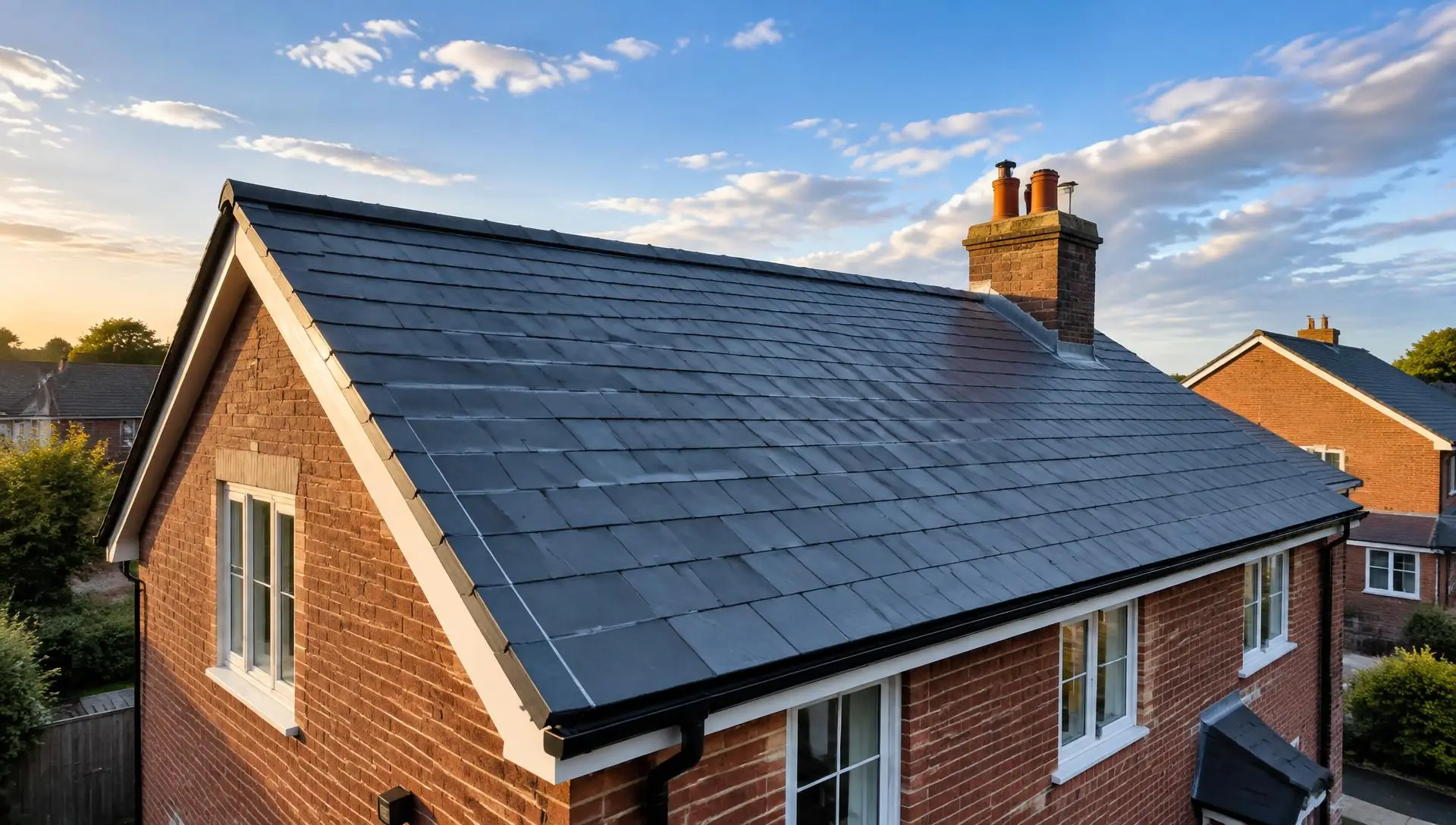
Why lifespan varies so much
You will see confident figures quoted online, but the honest answer is that it depends. Natural slate, clay tiles and concrete tiles each age differently. Even a durable covering fails early if the nails rust through, the battens rot or the underlay beneath perishes. Exposure plays a part too: a roof facing the prevailing wind on an open site works harder than a sheltered one in a town street.
Upkeep matters as well. Clearing gutters, replacing the odd slipped tile and keeping lead flashings sound all add years. A roof that has been ignored tends to fail in several places at once.
Signs you can spot from the ground
Stand across the road or at the end of the garden and look along each slope. Things worth noting:
- Tiles or slates that have slipped, cracked or gone missing, especially if it keeps happening
- A ridge line or slope that dips or looks wavy rather than straight
- Thick moss lifting the edges of tiles
- Gaps along the ridge or hips where mortar has fallen out
- Bits of tile or mortar collecting in the gutters
Signs inside the loft
If you can get into the loft safely on a dry day, take a torch. Daylight showing through the roof is an obvious warning. So are dark water stains on the rafters, damp or torn felt hanging between them, or a musty smell. On older houses with no felt at all, look at the underside of the tiles for crumbling or flaking.
Try not to step between the joists, and never put weight on the ceiling plaster.
Flat roofs age differently
Flat roofs show their age with blisters, cracks, splits along joints and puddles that stay for days after rain. A soft or spongy feel underfoot means the deck may be damp. We cover these in more detail in how long a flat roof lasts.
What makes a roof sag
A sagging roof usually points to the structure, not the tiles. Common reasons include heavier tiles fitted on rafters designed for something lighter, timbers weakened by a long-term leak, or roof members that were removed during an old loft conversion. A slight historic dip may be stable; a sag that is getting worse needs looking at.
Repair or replace: how Lee decides
When Lee Draper looks at an older roof, he weighs up three things. Is the problem in one area or everywhere? Are the battens and felt still doing their job? And how much would it cost to keep patching compared with doing it once? If one slope has a few slipped tiles, a repair is the obvious answer, and our roof repair cost guide explains what goes into that. If the felt has failed across the roof and tiles are slipping on every side, he will tell you a re-roof is likely the better value.
What a re-roof involves
A re-roof means stripping the covering back to the rafters, checking and repairing timbers, laying new breathable membrane and battens, then recovering in tile or slate and finishing the ridge, hips and flashings. Our new roofs and re-roofs page explains each step, and the new roof cost guide covers what changes the price.
If you are seeing any of the signs above, book a free site visit or call 07947 758052, Monday to Friday, 8am to 5pm.
Small jobs that buy time
Even an ageing roof can often be kept sound for a while with sensible upkeep. Replacing slipped tiles promptly stops water reaching the battens. Having cracked ridge mortar rebedded keeps wind from lifting the top course. Keeping gutters and valleys clear means water leaves the roof the way it should. Checking lead flashings after a storm catches problems before they become stains.
None of this will turn back the clock on a roof whose felt has failed everywhere, but it can give you time to plan and budget for a re-roof rather than being forced into one by a sudden leak. If you are not sure which situation you are in, a free visit from Lee will give you a clear answer and, if you want one, a written price for both a repair and a full replacement so you can compare.